Tohu Māori — Māori motif
Kōwhaiwhai
Ture · Whakapapa · Tikanga as the first law
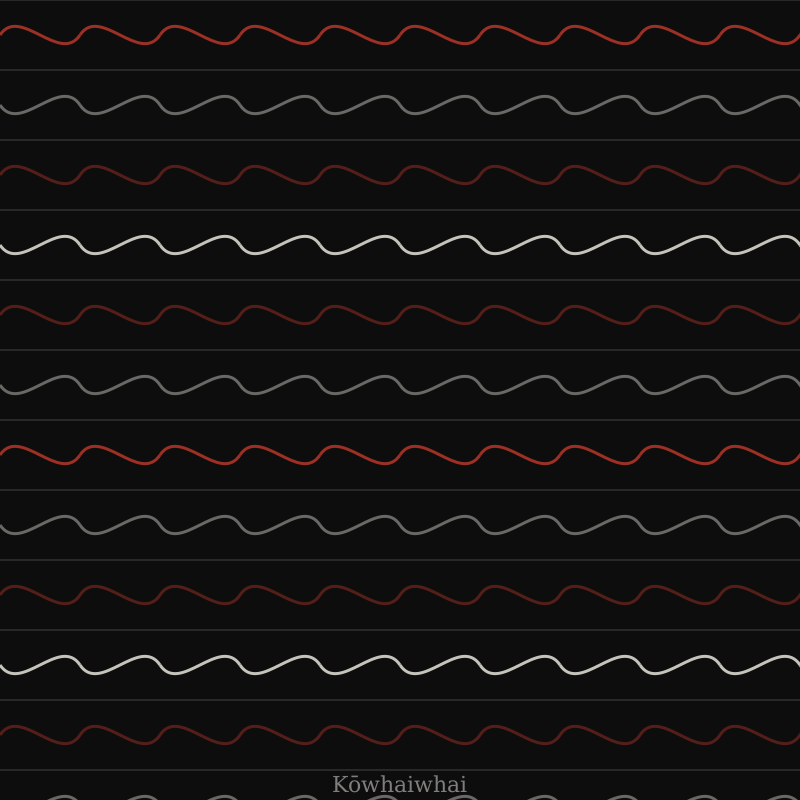
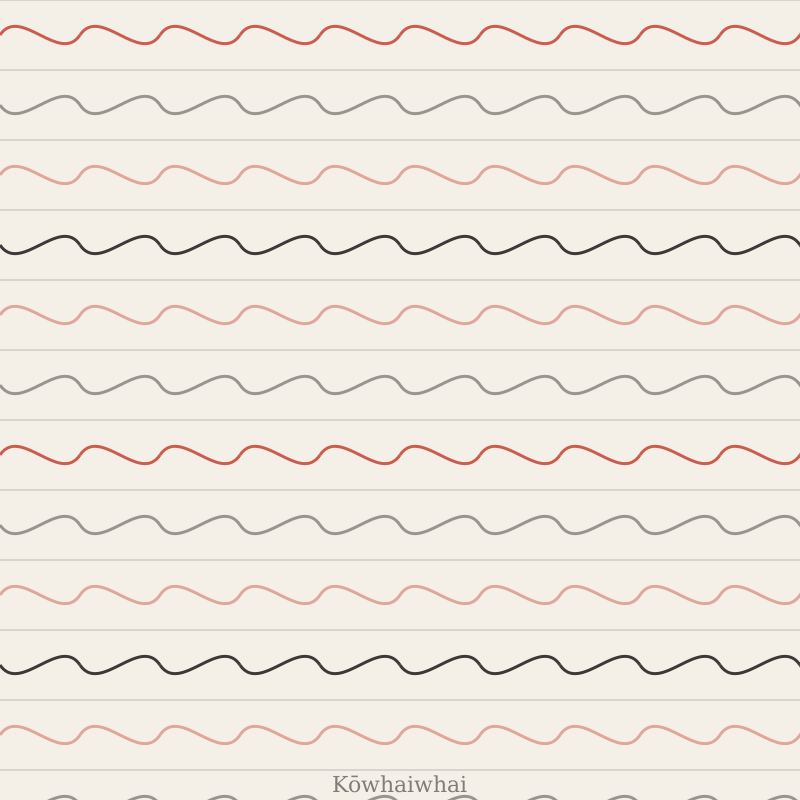
Rafter scroll patterns — genealogy painted on the ridgepole.
Cultural context
Kōwhaiwhai are the painted scroll patterns on the heke (rafters) and tahuhu (ridgepole) of a wharenui. They are among the most distinctive elements of Māori architecture — flowing red-on-white or red-and-black S-curve forms that encode whakapapa, connect ancestors to descendants, and carry the tikanga of the house.
The word kōwhaiwhai comes from whai — to follow, to pursue, to trace. The patterns literally follow the lines of genealogy, tracing the connections between people, events, and spiritual forces that make a wharenui the living embodiment of an ancestor.
The patterns are not merely decorative. They are legal texts in a literal sense — they encode who has rights in this house, what obligations exist, and what tikanga governs behaviour within. The ridgepole is the spine of the ancestor; the rafters are the ribs. The kōwhaiwhai are the genealogical record written on the body.
In this course, kōwhaiwhai represents Ko te tikanga te ture tuatahi — tikanga is the first law. Not Parliament. Not the Companies Act. Not the Privacy Act. Tikanga. It was here before all of those, and it will persist after them.
In this course
Module 4 — Tikanga, ture, mana whakahaere. Tikanga is the governance framework. Kōwhaiwhai are its visual expression — the law written on the rafters, available to all who enter the house.
Wider tradition
Kōwhaiwhai traditions vary by iwi and region — different scroll forms, proportions, and colour combinations encode different tribal identities and histories. The skill of creating them was held by tohunga (experts). In contemporary Māori art, kōwhaiwhai have been extended into new materials and contexts by artists including Kura Te Waru Rewiri, Shane Cotton, and many others.
Tiaki — Download social cards
Kōwhaiwhai campaign cards
6 messages × 4 platforms = 24 cards. Click to download SVG — use directly on X, Instagram, Facebook, or TikTok.
Akoranga — Learning activity
Tikanga test
Take any tech company's privacy policy. Apply three tikanga principles: whakapapa (what is the relationship between company and user?), mana (whose authority governs?), kaitiakitanga (who guards the data and for whose benefit?). Score it. Publish your verdict.
Toha — Social copy
Ready-to-post
Tweet 1 — Ko te tikanga te ture tuatahi
Tikanga is the first law. It was here before Parliament, before the internet, before AI. Any technology that ignores tikanga is operating outside the law. Module 4 👉 [link] #KaupapaMāori #Tikanga #KiwiDialectic
Tweet 2 — He tikanga tō ia āhua
Everything has tikanga. Every relationship, every piece of data, every AI system. The question is whose tikanga governs. Free course 👉 [link] #KiwiDialectic #MāoriDataGovernance
Tweet 3 — Whakahokia mai
Return what was taken without consent. The kōwhaiwhai on the rafter names the obligation. Data sovereignty is whakahokia — the return. #TinoRangatiratanga #KiwiDialectic
Kōrero Tāhūhū — Full thread
X / Twitter thread — copy and fire
Hashtag bank